Custom Properties and Multi-Turn Cards
Tonight, we have a major release happening that we know all of you are excited about and have patiently been waiting for.
- Want to alter the core ticketing experience with your own optional/required fields?
- Looking for a custom list for Requesters to choose from when submitting a ticket?
- How about creating conditionally dependent forms when creating a ticket?
- Resending a Form to the Requester, Assignee, a Collaborator, or Affected User?
We're not going to waste any more time than we have to. Let's jump into Custom Properties and Multi-Turn Cards arriving tonight; how they work separately, and how these two features play off of each other.

Custom Properties: Creating and Modifying
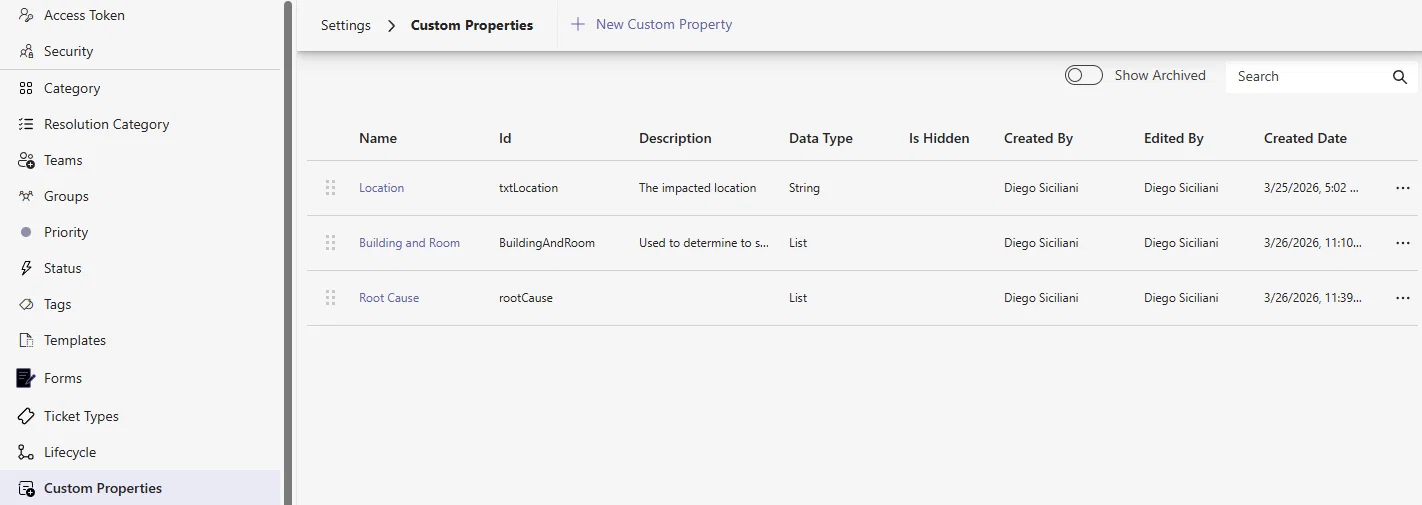
Like other features before it, head into Settings and you'll see the new Custom Properties navigation node. It's here you can create, edit, archive/unarchive, delete, and re-order how your properties appear across the Agent portal and Teams cards.
Creating a new property is easy, just click on New Custom Property or click an existing property to edit it.
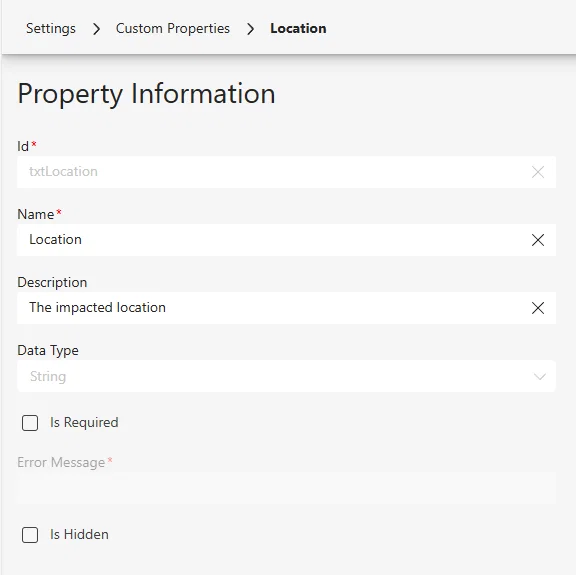
In this case, I've created a Custom Property called "Location". It's a simple text field (string) that I can always change the (friendly) Name, Description, whether or not its required, the error message to display if it is a required field, and finally if its hidden from users.
Why would I create a hidden custom property?
With hidden properties you can create a field that exists on every ticket, but can't be changed by anyone. So why bother? Because with Tikit's Automation engine or custom API calls, you can set these fields behind the scenes. Opening the door to creating fields for external integrations such as syncing monitoring alerts, security event IDs, CRM records, and more.
But of course, we are free to create any number of properties of any different kinds of types such as:
- string (text)
- numbers
- yes/no (checkbox)
- list
- date
- time
While being able to accept free text on a field is helpful, it also opens itself up for potentially bad data since anything can be typed into the field. Which is why we've also introduced support for...
Custom Properties: Lists
With custom lists, you're now free to create any kinds of lists you need for your ticketing processes.
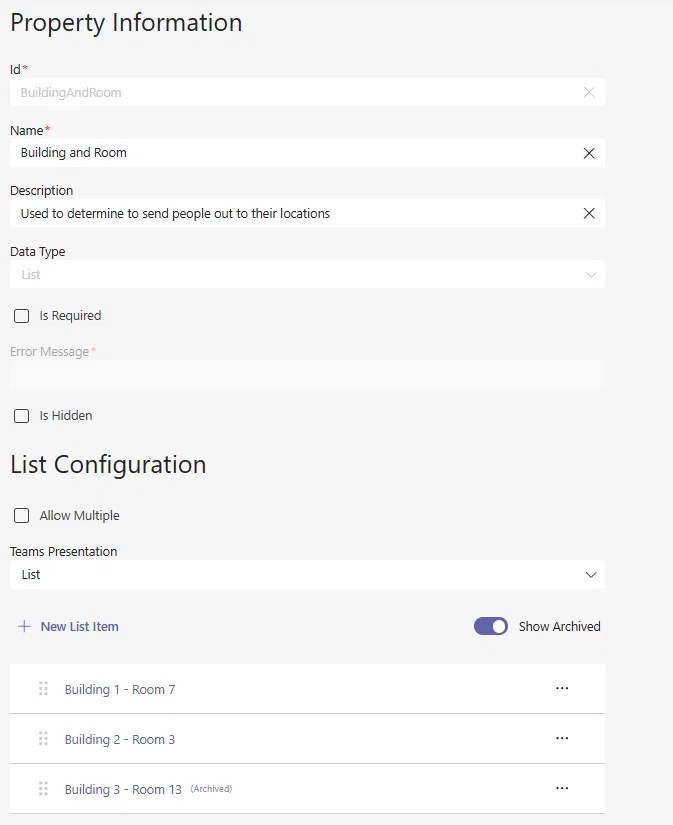
With a custom list, we're free to change a few things:
- Allow multiple: Much like Tags, you can decide if multiple items in this list can be chosen
- Teams Presentation: If you recall, just like in Forms you can decide how in Teams this list is experienced. Is it a dropdown with all of the choices? Or is it a lookup/search of all of your available options?
- Individually Archive items: Apart from creating/deleting items in our list, we can also archive/unarchive items within the list as well.
And of course, re-arrange those items at any point in time.
With our one or many properties saved, we'll be returned to our list of all of our Custom Properties. Here we can re-arrange them and it's worth noting that changes are saved and instantly replicated across Tikit. This order impacts how you'll see Custom Properties when Creating a ticket, Editing a ticket, getting Teams notifications on the ticket, and more.
Where are Custom Properties Experienced?
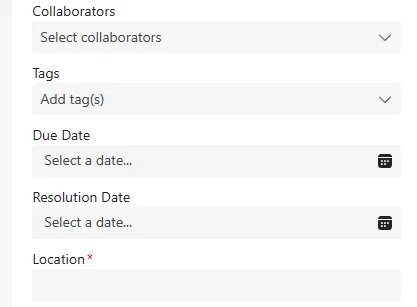
With the advent of Custom Properties, there are a host of places across Tikit that they can be used. Such as:
- Build Automations and/or SLAs with them
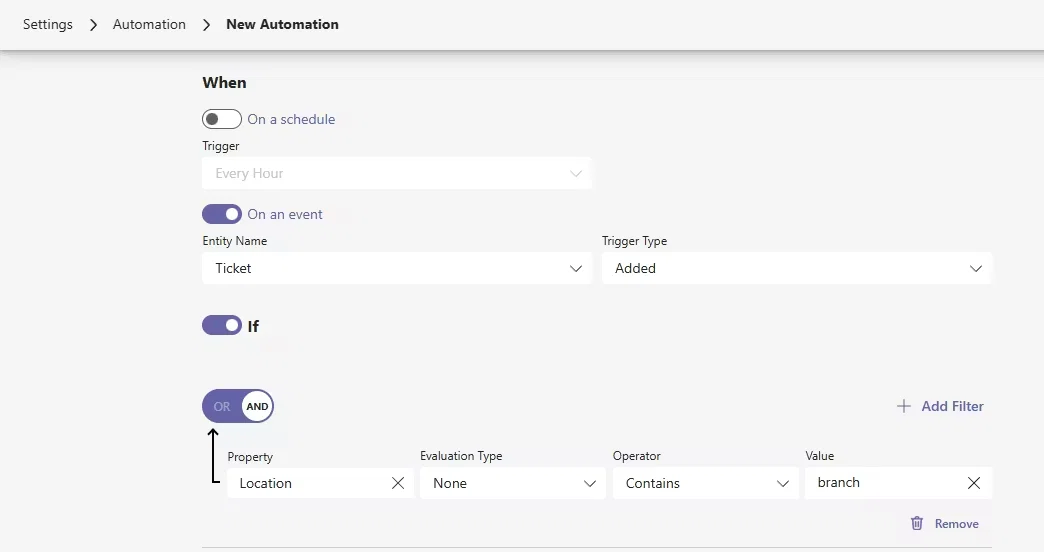
- Use them in Notification Center automations
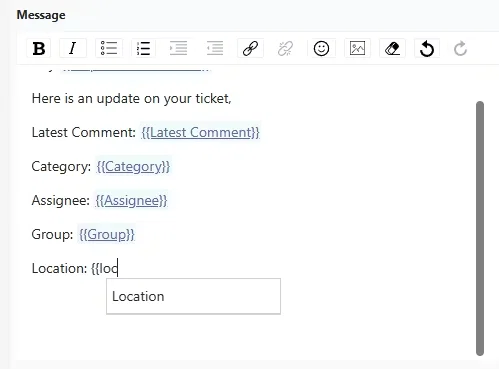
- Form Designer
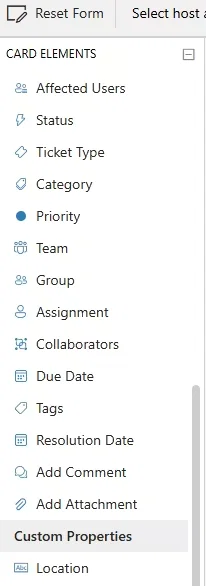
- Create/Edit a ticket in the Agent portal
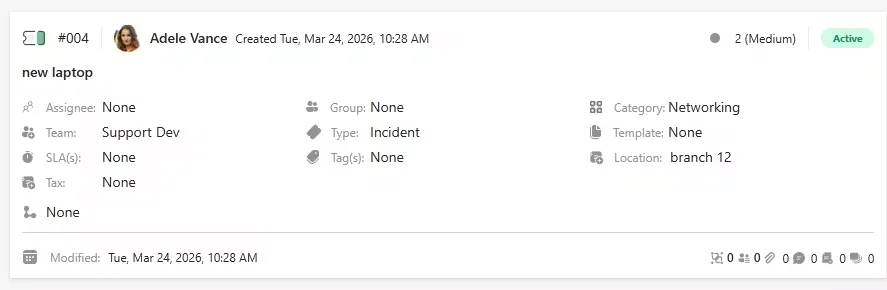
- Power BI/Excel
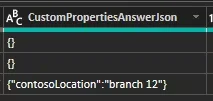
And finally, Custom Properties are also available across all Templates.
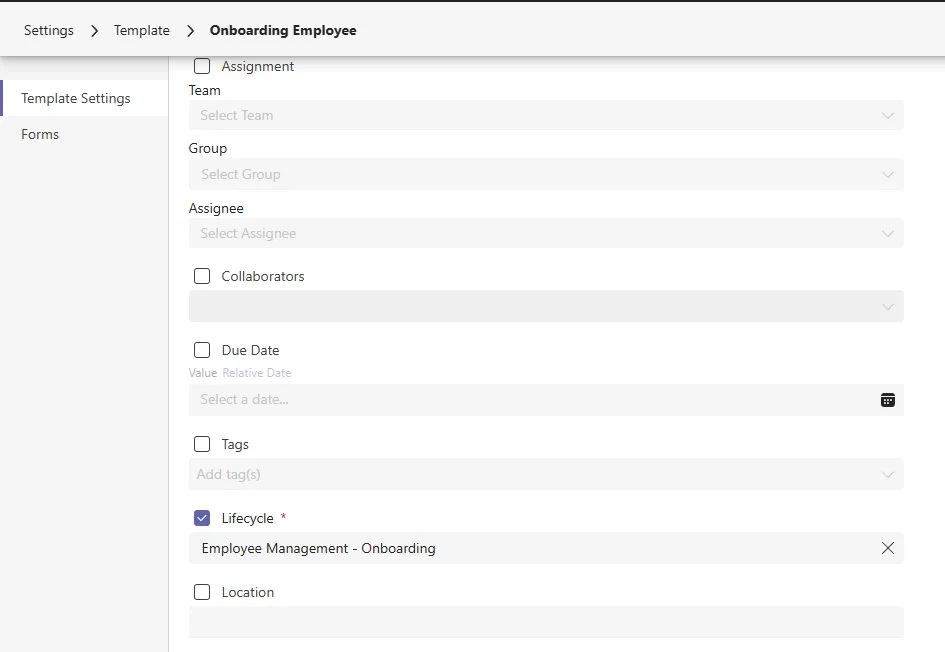
Speaking of Templates, it's probably worth talking about the next big change that you might have already noticed in the above screenshot.
Multi-Turn Cards
Another longstanding request has been the ability to present multiple forms to a user to fill out, and conditionally present those forms based on how the previous form one was filled out. This would have several benefits:
- Large forms served via Tikit Virtual Agent, Requester Portal or the Agent Portal could be condensed and/or split out into several smaller forms
- Large forms (30+ inputs) in some cases might become very small forms (less than 10 inputs) depending on how they are answered
- The Default Template: Requester Create Ticket Template could be modified to let users define their own Priority of a ticket and only if they choose High Priority, then a subsequent question appears asking for their contact information
- When building a New Hire/Onboarding Template, you could conditionally present New Hardware and New Software Forms depending on their Department or any other number of fields
So let's jump into what this means for Templates and Forms.
Templates and Forms have been split out
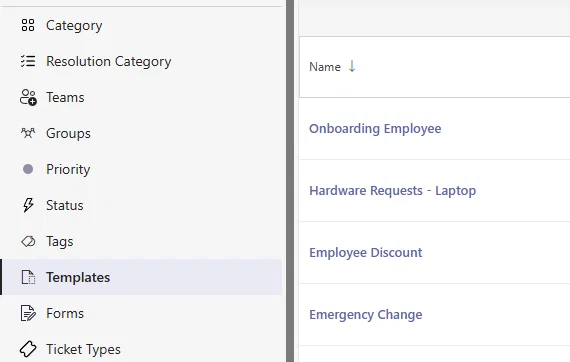
The biggest visual change you'll see as a Tikit Admin, is that Templates and Forms have been separated. As a result:
- You can create Templates with no forms, 1 form, or many forms
- If you've created Templates with no forms previously, you had to re-create the template - no more! You can now add/remove forms from a Template as you see fit
- You can create multiple Templates that leverage the same form
As part of this upgrade, your Templates and Forms have been separated, named the same, but their relationships remains. Giving you freedom to modify existing Templates with a wholly new experience for...
Managing Forms on Templates
Also available within Templates is the new Forms area. Here you can add one or many forms, define the Transition to move between them as someone fills them out, and decide what happens when those conditions are met.
Multiple Transitions
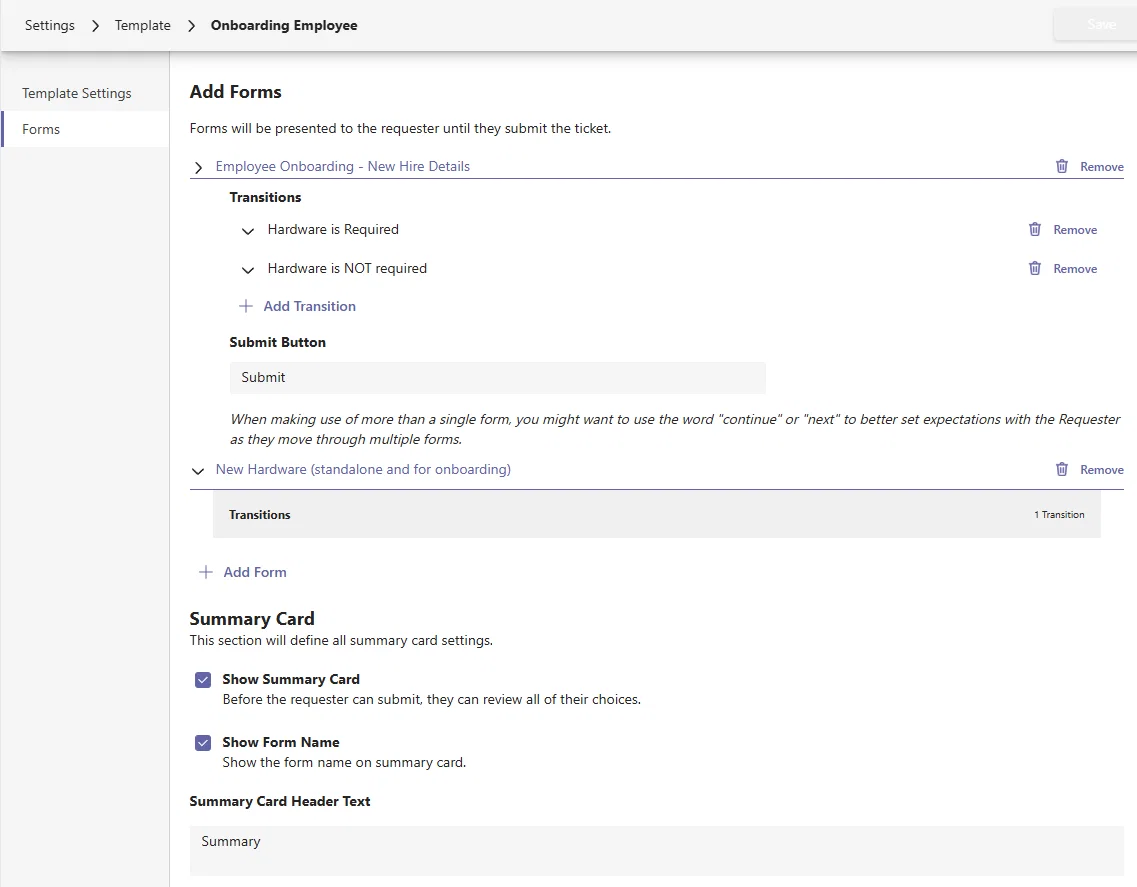
Transitions with Logic Builder define the condition using any Input from the form
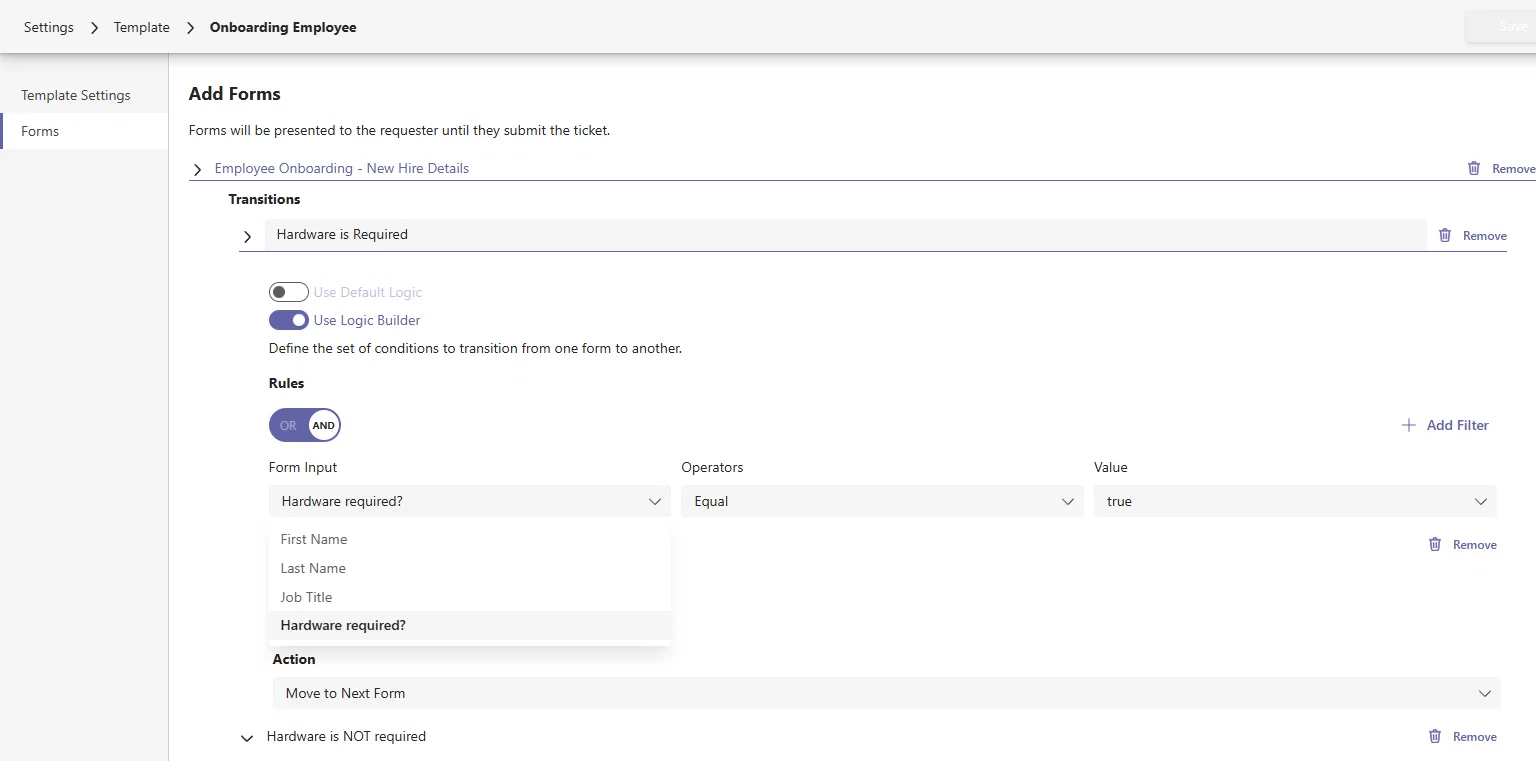
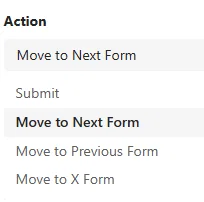
The Action associated with a Transition defines what happens when the condition is met
In the above example, we have two forms for our Onboarding Employee Template. But the second form of New Hardware will only be served if on the first form Hardware Is Required is checked off. We also have a couple other options you can configure here as well:
- Show the Summary Card: Before the requester can submit, they are presented with a card that shows their answers
- Show Form Name: The names you've given your forms can optionally be shown to the user filling them out
- Summary Card Header Text: optionally override the name of the Summary card
These three options can be set on a Template by Template basis. So let's check out how ALL of this is experienced in Teams with Tikit Virtual Agent.
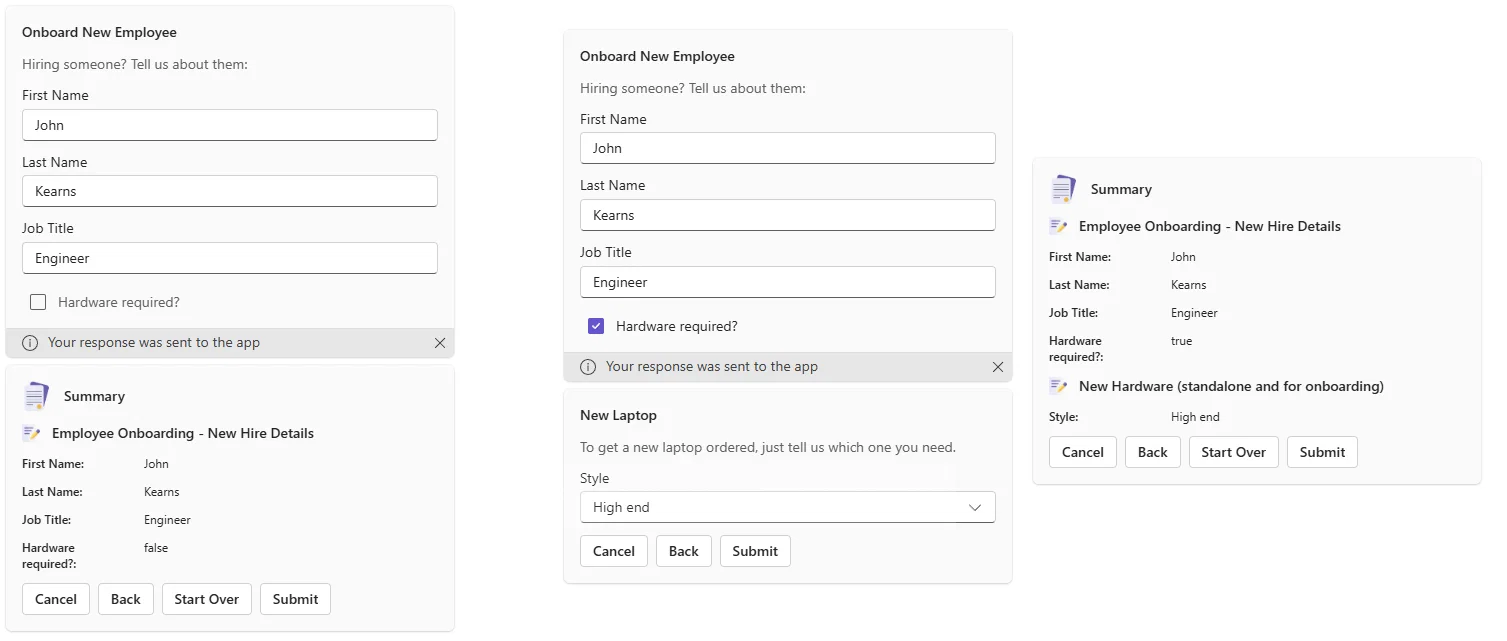
Whether you request forms via chat, start them from from the Help Card or even on the Requester Portal. You can see that in our first form (on the left) we have a checkbox that drives whether or not the New Laptop form is shown to the user.
- When it's unchecked, we go straight to the Summary Card.
- When it's checked, we get a second form, and then the Summary card.
You might also notice that subsequent forms present options for the user:
- Cancel: Abandons the submit experience
- Back: Goes back to the previous card that was filled out and maintains all current answers
- Start Over: Goes back to the very first card and erases all of the answers filled out
- Submit: Creates the ticket
Forms
With it's own dedicated navigation, you can now create, edit, archive, unarchive, and delete forms.
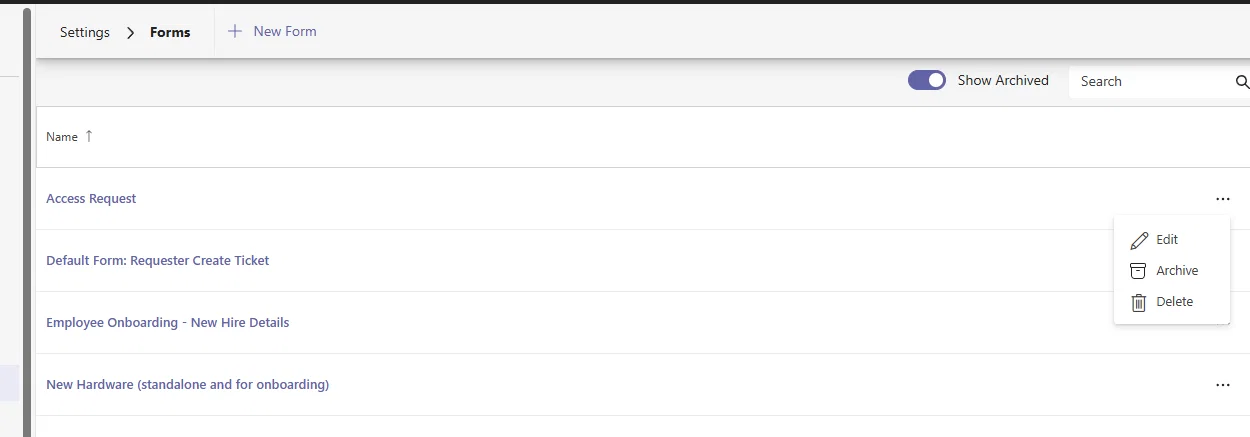
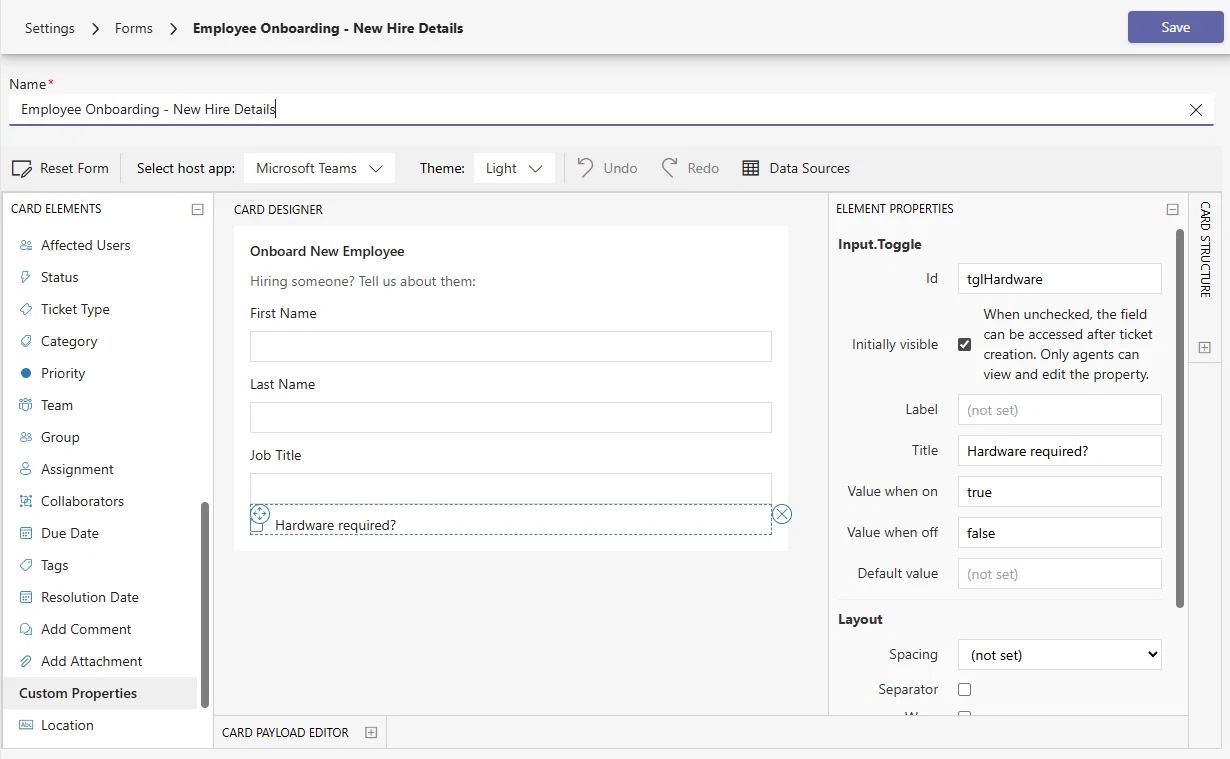
Just like before, Form Designer offers you the ability to work within the Microsoft Adaptive Cards framework, add Tikit specific fields, and of course your own Custom Properties if you've created them. It also introduces the Name field along the top to give your forms context when viewing them in the list or when user's see them on the Summary Card.
Sending Forms (Edit Ticket/Automation)
Also arriving with the split of Forms from Templates, we're also introducing some new functionality specific to how you can work with Forms.
First - need to resend a Form even though the Template has been applied?
Edit Ticket menu

Send Form window
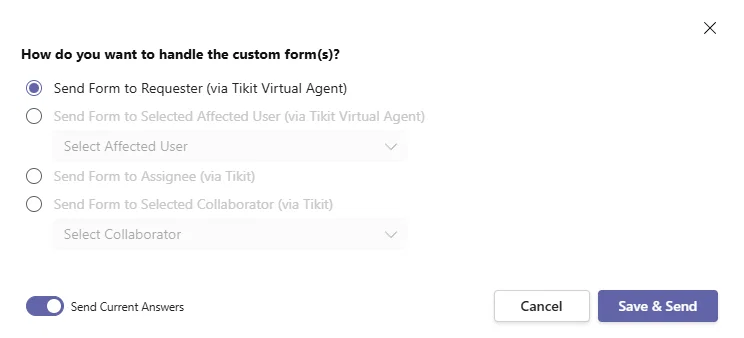
You can now send/re-send a Form to any member associated to the ticket. In addition, you can also choose to Send the existing Answers to the Form back out to the same person who filled it out or someone else on the ticket.
Second - need to send a Form via Automations?
You might already be familiar with the fact you can Apply a Template within an Automation.
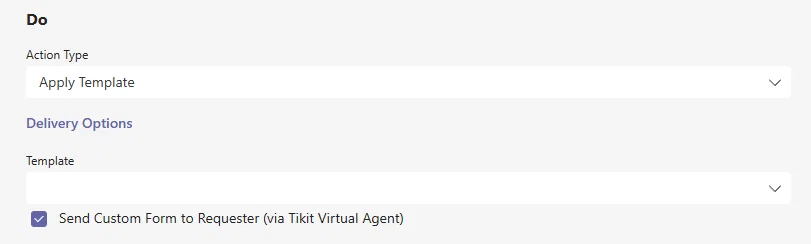
But with tonight's update, you'll also gain another Automation action with the addition of Send Form
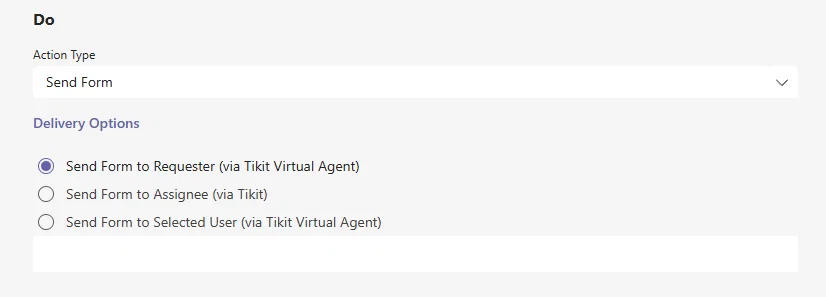
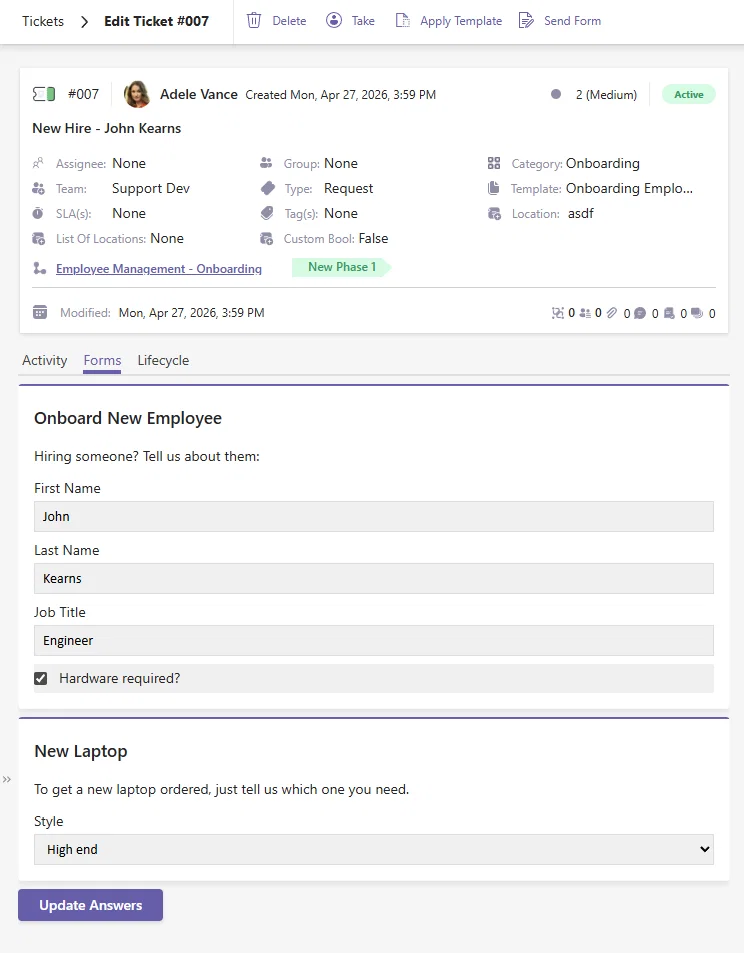
Third - Forms is now its own dedicated Tab when editing tickets
With the introduction of Multi-Turn Cards, we also moved the Forms from the right hand side to its own dedicated tab. This ensures that regardless of the number of Forms associated to your Template, they'll have their own dedicated area without feeling crammed along the right.
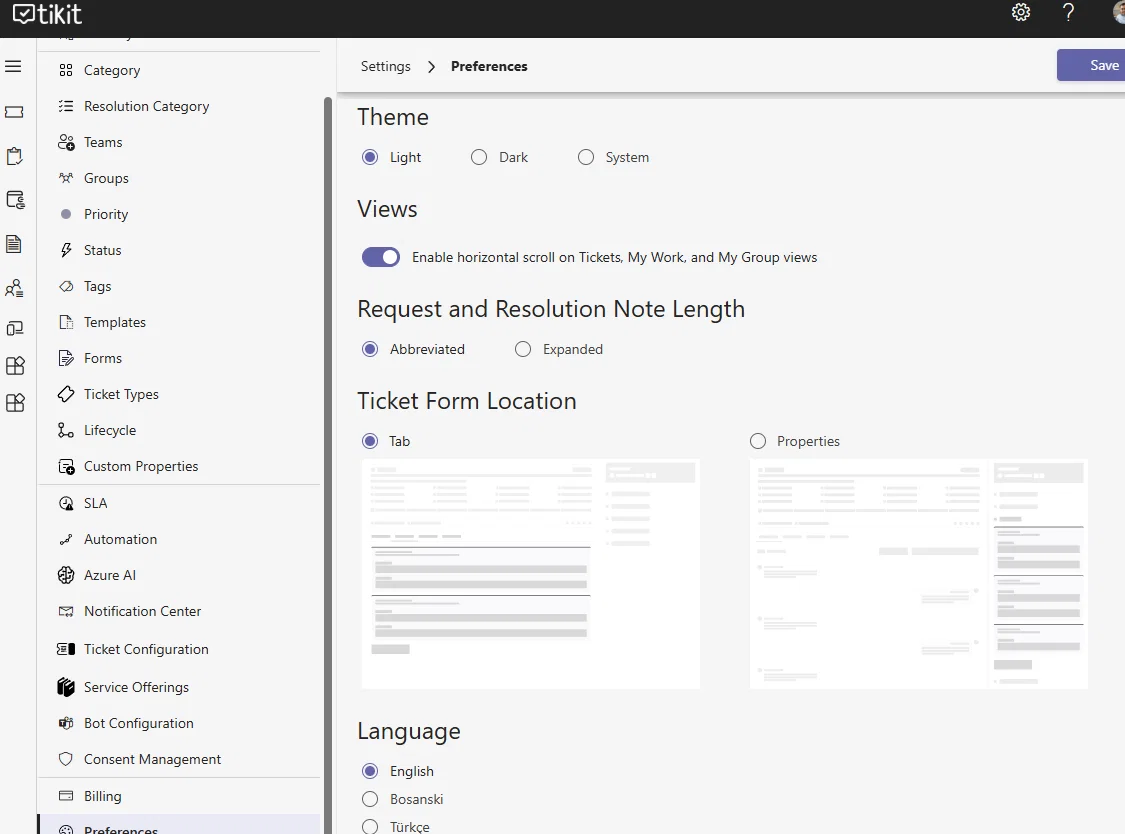
But if you want it back the other way. We made it a user preference giving you the flexibility to choose on a per Agent basis how you want to view things.
Just one more thing
Something else happening in this release is sorting of all administrative concepts such as Teams, Groups, Tags, Templates, Forms, Lifecycles, SLAs, and Automation. But beyond just sorting, we're also adding more fields to the Templates view to help you navigate them easier at a glance.
Check out Templates that now offers the associated Team, Group, Assignee, if a Form is related, and the associated Lifecycle

Wrapping Up
And that about does it for these two features in this release. But as always, we've got plenty of more features on the way this year and this week.